
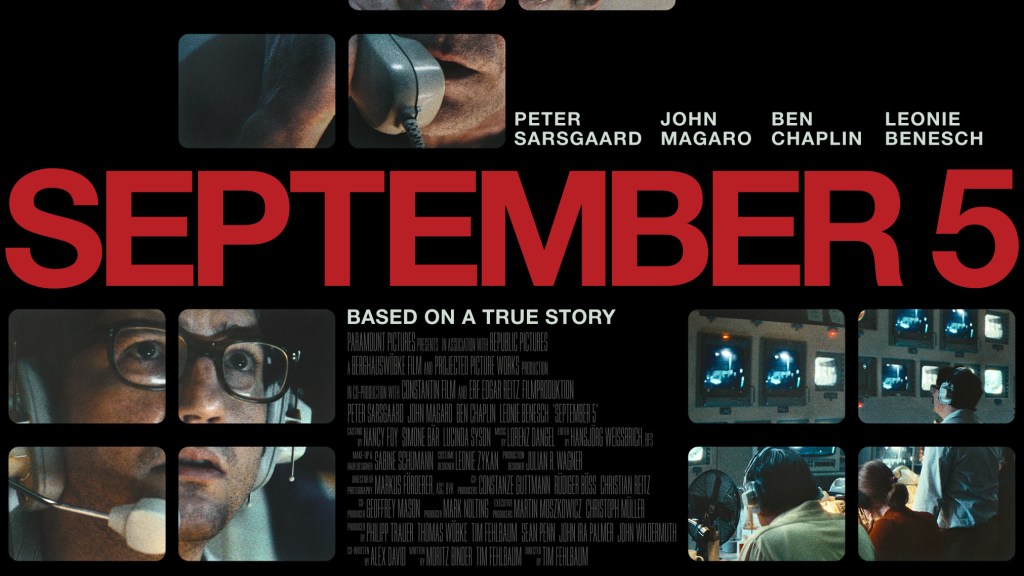
⭐️⭐️⭐️⭐️⭐️ | Rated R | 95 minutes
SEPTEMBER 5 tells a story that was before my time, however, the impact from that date changed the media landscape and as a media professional, I have felt the impacts throughout my career. It’s an intense telling of the true story of the terror attack at the 1972 Munich Olympics, from behind the cameras.

Along the lines of last year’s Saturday Night, this historical dramatic thriller also takes the viewer behind the scenes, telling the story almost exclusively from the control room as chaos broke out around the games of the 20th Olympiad. On September 5, 1972, eight members of a Palestinian militant group called “Black September” invaded the Olympic Village and killed two members of the Israeli Olympic team, taking nine hostage.
ABC was televising the Olympic Games that year for the very first time live. It’s hard to imagine now, but the games were always shown on television from tape or even from film at the events, aired later. With the satellite age in full swing, ABC took on the momentous task of airing some of the competitions live around the world. And back then, “live” really meant “live” – no seven-second delay, as it hadn’t been invented yet.
Jim McKay, ABC’s chief sports anchor, was the face of the story to nearly 900 million people. Joined by legend Peter Jennings, together, they told the world what was happening as live images from the hostage situation streamed to their living rooms in real-time.
While what people saw might have seemed polished and well-produced, behind the scenes, chaos ensued. You had a sports coverage team being called into action to cover a world-changing news event… and they sprung into action.
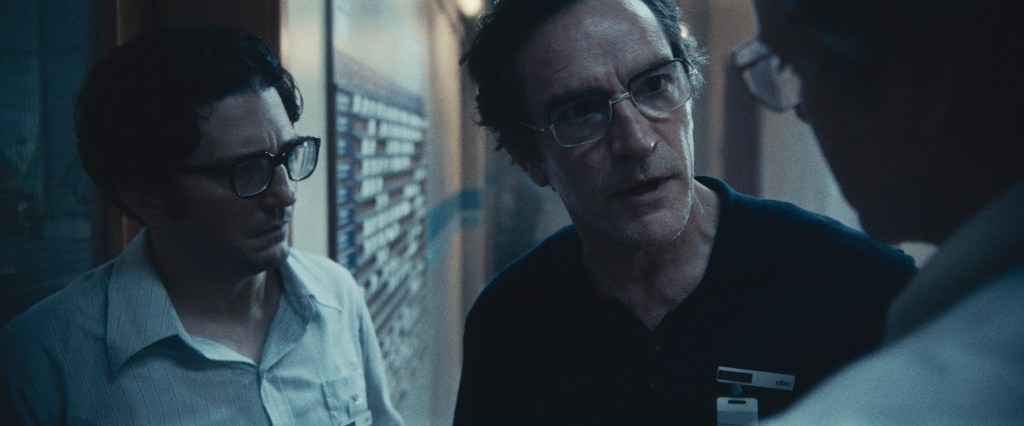
Geoff, a rising star among ABC Sports played by John Magaro, finds himself at the center of the action after his German interpreter Marianne (Leonie Benesch) hears distant gunshots in the middle of the night. Geoff immediately contacts his mentor Marvin Bader (Ben Chaplin) and their TV executive boss Roone Arledge (a stone-faced Peter Sarsgaard). Once the team is up and gathering their wits about them, Geoff – eager to prove himself – starts getting live cameras into various vantage points that only ABC had because of their live-tv capabilities.
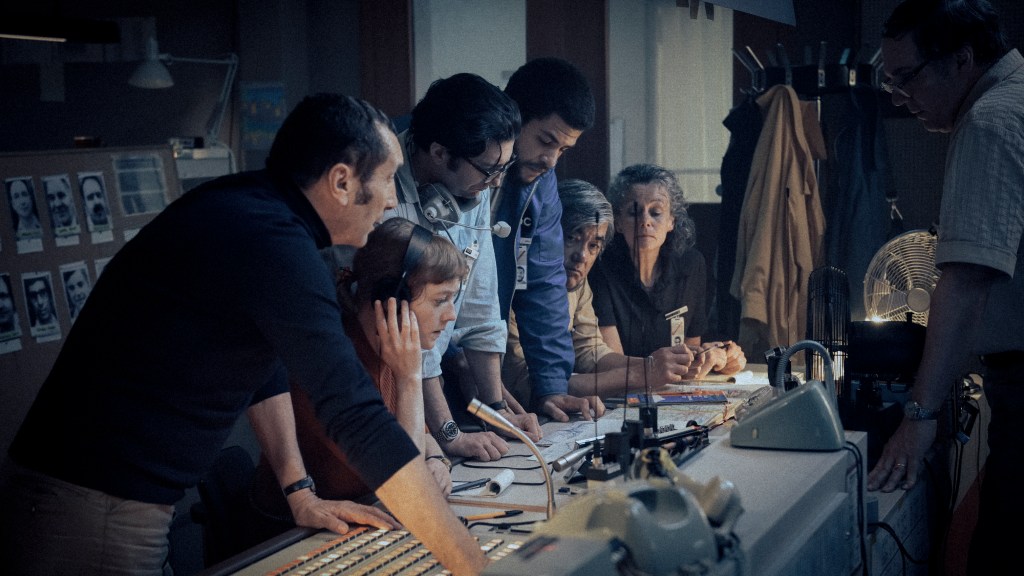
Director Tim Fehlbaum chose to shoot the film in a 1970’s-look complete with authentic film grain, to really help put the audience in the time and space of the story. Interspersed with actual footage from that day, the film flips back and forth between real-time coverage and the pure panic happening behind the camera as everyone struggled to get the story, confirm sources, and report the news as it was happening.
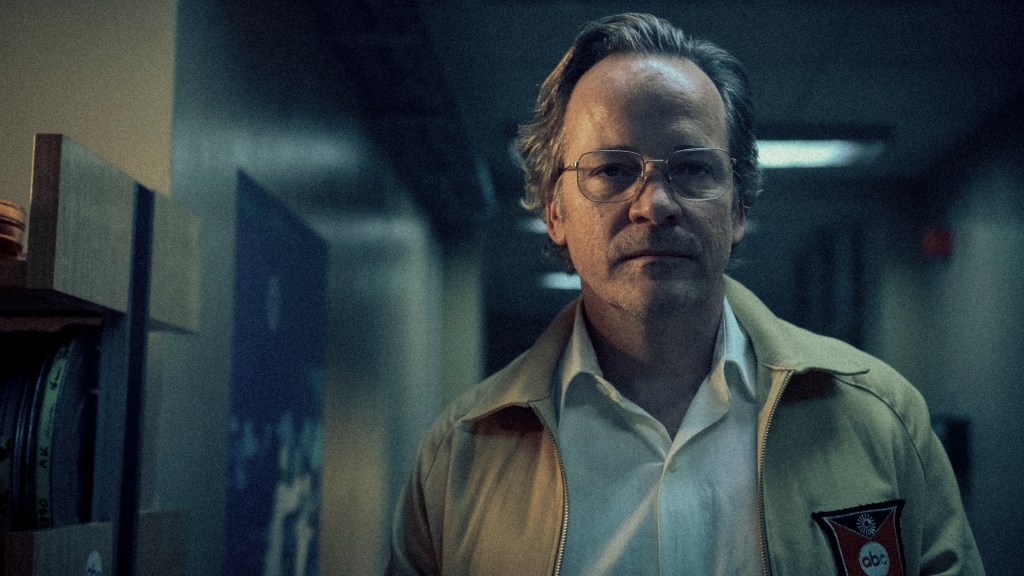
Turns out that teams used to covering rapid-fire sporting events would prove to be an unmatched advantage for ABC. We witness the struggle that Arledge faced with his own bosses and shuffling around satellite time – something that doesn’t happen today, was all too common in the burgeoning age of satellite coverage. CBS was refusing to give up their satellite timeslot unless ABC would share their live coverage. After a light-bulb moment and the invention of the “network bug” – the now-ubiquitous logo in the corner of most TV channels – they got to keep their live coverage on the air.

The intensity of the story is captured so well by the director and the cast. They had our screening audience in absolute silence – holding our collective breath through many unthinkable scenarios in both the challenge of reporting the story quickly and accurately, and the unthinkable terrorist attack on which the film is based. It was clear that while many may have heard of this event, the impact wasn’t fully understood…and that’s where this film shines. It explains the impact it had on media, and society at large. It was the first time a terrorist attack had been brought to the world stage as it happened. It was a world-wide wakeup call.
I enjoyed the thoughtful presentation and accurate portrayal of the analog technology of the era. From developing 16mm film reels, smuggling cameras into the Olympic Village, landline phones deconstructed to get reporters on the air, to showing the crude rudimentary way titles were displayed on screen – each detail helped to sell the drama surrounding the ABC Sports production team that found themselves part of the story itself when it was realized that the terrorists might have also been watching their feed.

News reporters can sometimes find themselves as unwitting participants in the story, and this film helps explain some of the standards that were born out of this particular event’s coverage. They were charting new television territory and it felt like we were charting that territory along with them.
While the story may have ultimately ended in tragedy, the greater good found from live television news gathering has changed the landscape of media forever. In a world where news coverage can sometimes be “too live” such as a high-speed car chase, the standards ABC Sports created on-the-fly back on that fateful September day still dictate the way news is covered today.
For a media or history buff, or for anyone that loves a great dramatic thriller, September 5 is a must-see.
September 5 is in select theaters now, nationwide on January 17.




 OUT and ABOUT
Leave a comment