
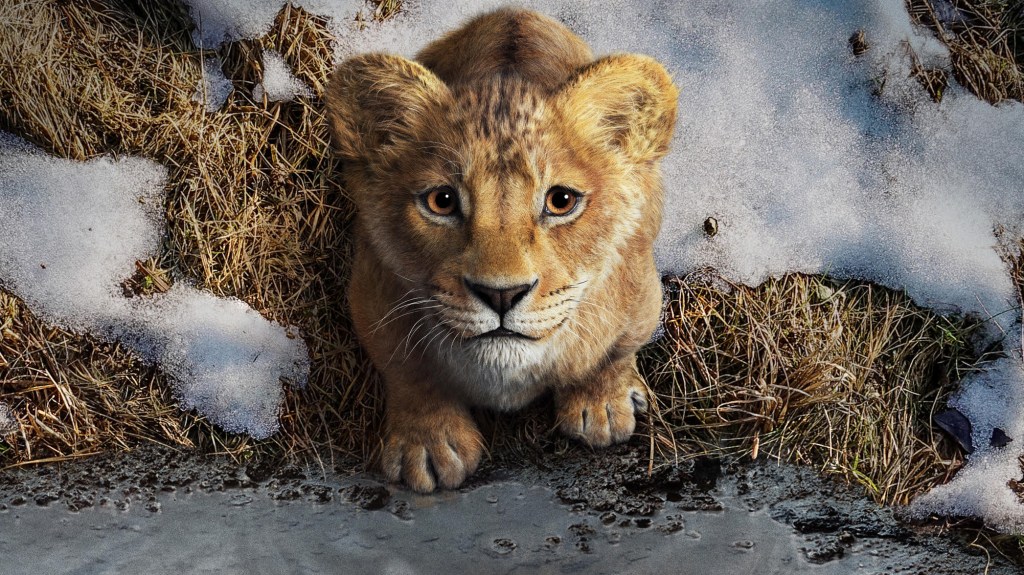
⭐️⭐️⭐️⭐️ | Rated PG | 118 minutes
Astounding visuals and a soundtrack comprised of songs from Lin-Manuel Miranda cement “Mufasa: The Lion King” as the king of the box office this holiday season.
Don’t miss the beginning of the film, as there is a moving tribute to James Earl Jones, voice of Mufasa in both the animated and ‘live action’ Lion King movies. The tribute sets an emotional tone through the first few scenes necessary to understand the impact of the young Mufasa’s challenging introduction to life on the savannah.

Before we’re introduced to Young Mufasa (Braelyn Rankins), this story starts back on Pride Rock with Simba (Donald Glover) pacing in worry about meeting up with Nala (Beyoncé Knowles-Carter) as he calls on Timon (the wonderful Billy Eichner) and Pumbaa (Seth Rogen) to babysit daughter Kiara (Blue Ivy Carter in her film debut). Rafiki (John Kani) joins the babysitting team as Simba departs.

The film smartly uses Rafiki telling a story to young Kiara, with comic relief interjections from fan-favorites Timon and Pumbaa, about how her grandfather was responsible for creating the harmony among community they live in today. Borrowing a term introduced in “The Lion King” stage musical, we get to hear Afia (Anika Noni Rose) sing ‘Milele’ about the place beyond the horizon they aspire to live one day.

Through Rafiki’s storytelling, we learn a rich backstory about Mufasa and how he met his brother Taka. Taka has a British accent, and if you know any lore about “The Lion King” you can probably figure out where this is headed… but that’s OK, because the film doesn’t aim to hold back secrets, but rather flesh out and world-build in a way that’s unexpectedly surprising and fun.

“I Always Wanted A Brother” is an absolute show-stopping performance with Mufasa and Young Tala (Theo Somolu) frolicking through the pride lands and is utilized as a coming-of-age musical montage through pure Lin-Manuel Miranda magic. Much like the timeless “I Just Can’t Wait To Be King” from the animated film, we see the young cubs grow into adolescent lions throughout the song.
The film doesn’t waste any time establishing Mufasa (Aaron Pierre) and Taka (Kelvin Harrison Jr.) as an inseparable pair of best friends, mothered by the warm and all-loving Eshe (Thandiwe Newton). This is welcome because there’s a lot of ground to cover in two hours. But don’t get me wrong, at no time does this story feel ‘rushed.’
By now, viewers will be so lost in the absolute triumph of the visuals we’ve been treated to, you’ll be completely transported into the very-real looking world of “The Lion King.” Sweeping camera shots of the savannah could almost have you believing you can smell the air and feel the breeze.

Of course, no Disney movie would be complete without a villain and “Mufasa’s” villain is a doozy… they cast an expert in villainy as the voice of Kiros: Mads Mikkelsen. Mikkelsen is no stranger to playing menaces and is rewarded with a song that steals the show. “Bye Bye” has echos of “Be Prepared” from the original film blended with Lin-Manuel’s signature style to create the most memorable of performances.
I know I’m gushing about Lin-Manuel’s songwriting here, but he expertly used hints of the original soundtrack throughout his songs, which serve as genuine throwbacks to the established story, but stand on their own as new entries that are deeply connected to the world of “The Lion King.”
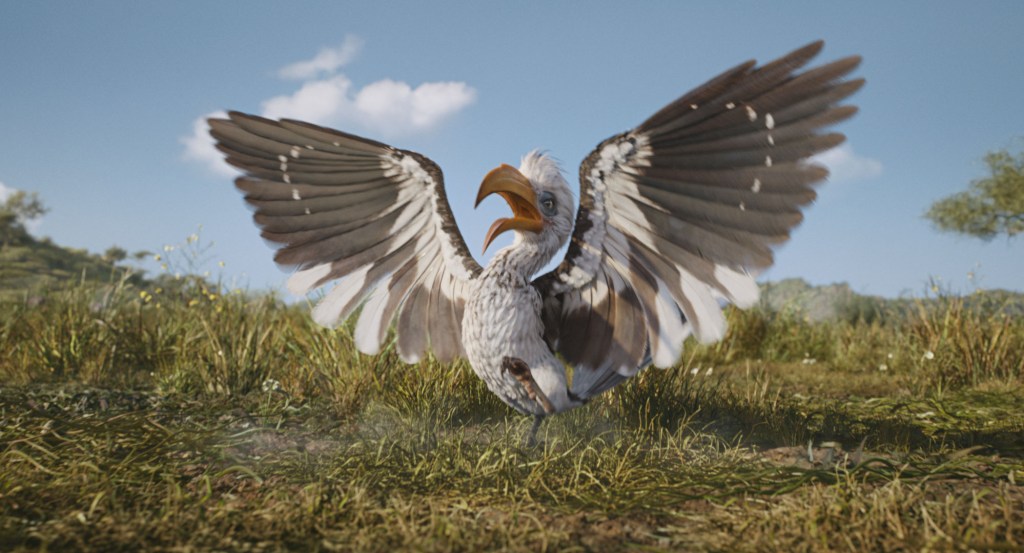
Thanks to Kiros and his band of misfit lions, Mufasa and Taka set out to find the land Afia told young Mufasa all about: Milele. On their part buddy-comedy part “Homeward Bound” adventure, we learn how Mufasa meets Sarabi (Tiffany Boone) and her scene-stealing bird servant Zazu. For the third time, Zazu has been recast yet again and is played by Preston Nyman for this film, having been voiced by John Oliver, Rowan Atkinson, and Edward Hibbert in previous films.
As our ragtag group of strays moves along, trying to avoid Kiros and company, they are also joined by a young Rafiki (Kagiso Lediga) who has also been astray from his own community. Rafiki telling a story about Rafiki is so very Lion King-meta that the joke is not lost on true fans.
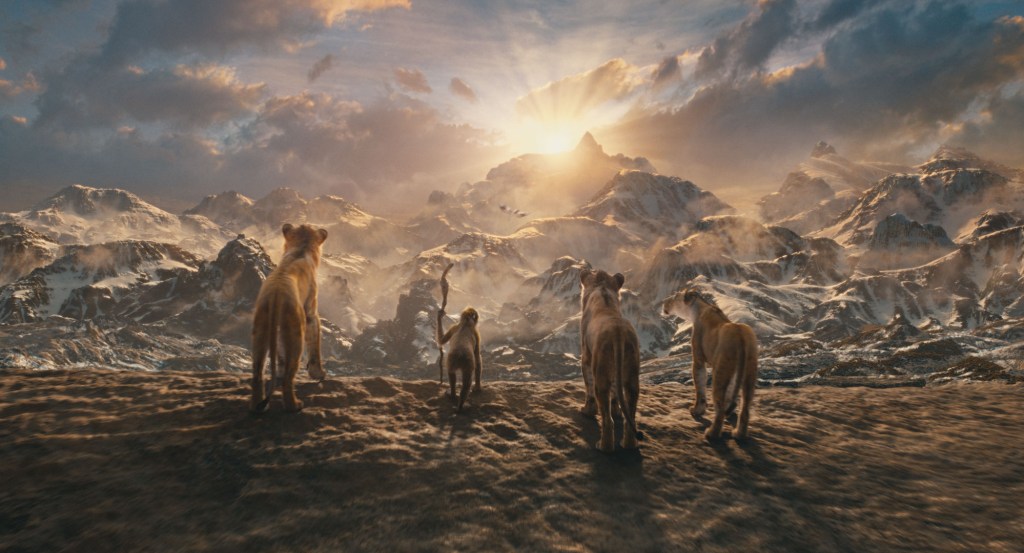
The story continues to build through its second act with occasional jumps back to “current time” with Timon, Pumbaa and Kiara interrupting Rafiki to ask questions about the tale he’s weaving. It’s effective storytelling and helps keep this film not so much as a prequel as a direct sequel to 2019’s “live action” “The Lion King”.
To address the spectacle of the visual effects once again, this film should be seen on the biggest screen you can find. Reviewers were treated to a screening in IMAX, and the movie’s expansive landscapes fill the screen from edge-to-edge, formatted specifically for the larger-than-life screens. I’d imagine seeing “Mufasa” in 4DX or Dolby Cinema would be an almost equal treat.
There wasn’t a single moment in the film where I felt like I was watching anything animated. It’s just that convincingly great. Sure, lions don’t *actually* talk in real life, but for a couple hours at least, I was able to detach myself from reality. And that’s what movies are all about.
“Mufasa” gives us the backstory we didn’t know we needed, as only “The Lion King” can.



 OUT and ABOUT
Leave a comment